Two things will tell you more about an electric scooter listing than range, speed or price combined. The first is whether the battery system is certified. The second is whether the listing is actually describing the scooter it appears to be selling.
Both take about thirty seconds to check. Neither is obvious. We found a listing with 982 ratings, sold under "electric scooter for adults", whose own spec table says it is for children aged 6 to 10 — and we'll come back to that one, because it is instructive.
1. UL 2272: the spec that can stop you bringing it home
UL 2272 is the safety standard for the electrical system of a personal e-mobility device. The important word is system: it tests the battery, charger, controller and wiring together, because that is how they fail. UL 2271 covers the battery pack on its own. A scooter that states both has been tested at both levels.
This exists because cheap lithium packs have started fires in apartment buildings, some of them fatal. The regulatory response has been fast. New York City requires certification for e-mobility devices sold in the city, and a growing number of landlords, university housing offices and transit agencies now ask for it before the scooter comes through the door.
So this is not an abstract safety nicety. It is the spec that determines whether you can charge the thing where you live. If your building has said anything about e-scooters, check this before you check anything else.
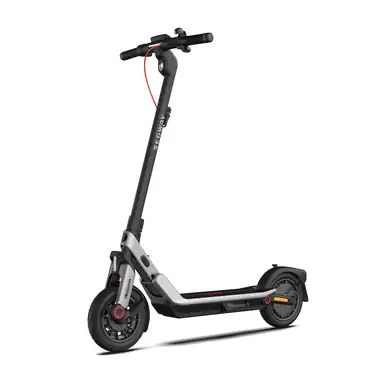
The problem is that most listings say nothing at all. Of the scooters we reviewed, only the Segway Ninebot E3 Pro states both UL 2272 and UL 2271 in the listing itself. The others may well be certified — Segway certifies much of its range — but "probably" is not an answer you want to give your landlord. Message the seller and keep the reply.
2. The kids' scooter problem
Here is the listing we mentioned. It is titled as an electric scooter for adults with a 500 W motor and a 19 mph top speed. It has 982 ratings and a 4.1 average. It appears high in the results for "electric scooter for adults".
Its own Amazon spec table says: Age range: Children. Maximum recommended age: 10. Its first bullet point says it is for children aged 6 to 10 and recommends a foot length of 7.8 to 9.4 inches.
The reviews read exactly as you'd expect from that: a nephew's birthday present, a child riding around the neighborhood. Mixed in with a review claiming 27-29 mph, which would be remarkable for a scooter built for eight-year-olds.
We left it out of our comparison. But the lesson generalises, so here is what to check on any cheap listing:
- Scroll to the spec table and read the age range. The title is marketing; the spec table is a structured field the seller has to fill in.
- Check the maximum load. A genuine adult scooter carries 220 lb or more.
- Check the deck length and handlebar height. A 37-inch handlebar is chest height on a child and thigh height on an adult.
- Count the range claims. That listing quotes 16/25/27 miles in the title, 12 miles in a bullet, and 15 miles in the spec table. Three different numbers on one page is not a variant issue, it's a listing nobody checked.
3. Peak watts versus nominal watts
Almost every budget listing advertises peak power: "1000W Peak Motor", "2400W Dual Motor". Peak is what the motor draws for a few seconds cresting a hill. Nominal is what it sustains all day, and it is the only figure that lets you compare two scooters.
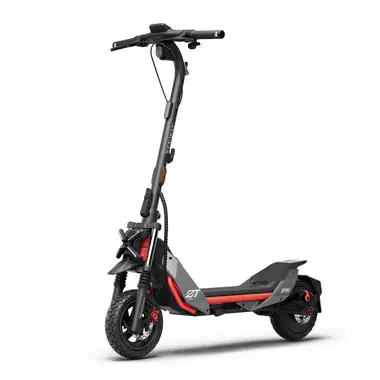
Watch what happens when you look for nominal. The Segway ZT3 Pro, at $999.99, advertises 1,600 W peak and never states nominal anywhere. The E3 Pro, from the same company at $599.99, publishes 800 W nominal — a real, comparable number.
On our charts, a scooter that only publishes peak power gets a hollow point on the push axis. We don't estimate it from the peak figure, because the ratio between peak and nominal varies wildly between manufacturers. An empty space is information; a guess is not.
4. Weight is the spec buyers regret ignoring
Range gets all the attention. Weight is what determines whether you keep using the scooter after month two.
The Segway ZT3 Pro weighs 65.5 lb. That is not a scooter you carry, it is a scooter you park — two separate reviewers mention it taking two people to get it up a flight of stairs on delivery. It is an excellent machine if you have a garage or a ground-floor entry. It is the wrong purchase entirely for a third-floor walk-up.
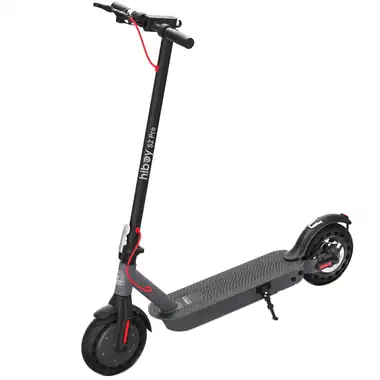
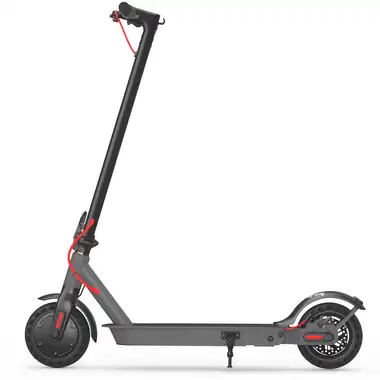
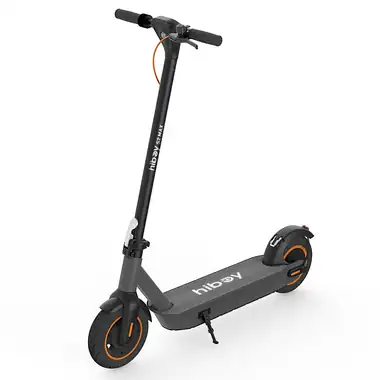
The Hiboy S2 weighs 35.5 lb and gets a lot less far on a charge. Which of those is the better scooter depends entirely on your staircase, and no spec sheet knows about your staircase.
One more thing worth flagging: several listings, including Segway's own E3 Pro, don't publish the weight at all. On a product whose defining feature is that it folds and travels with you, that omission is hard to read as an accident.
Two checks, thirty seconds, in this order. Is the electrical system certified? If the listing doesn't say, ask the seller and keep the reply. Does the spec table describe an adult scooter? Age range, max load, handlebar height — the structured fields, not the title.
Everything else — range, speed, suspension, tire size — matters, and it's all in our comparison tables. But it matters after those two, not before.